
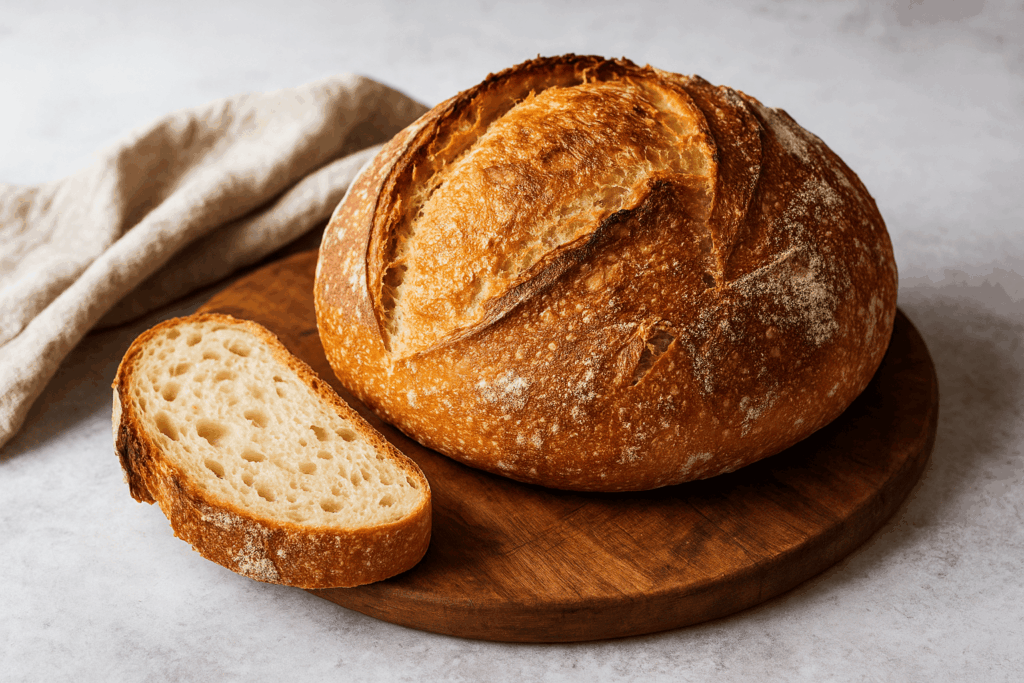
Artisan Sourdough Bread with Marriage’s Manitoba Very Strong White Canadian Flour
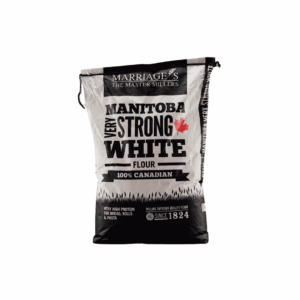
Marriage’s Manitoba Very Strong White Canadian Flour is a premium bread-making flour milled from 100% Canadian Spring wheat. With a protein content of around 14–15%, it has exceptional gluten-forming strength, making it perfect for doughs that require long fermentation, complex shaping, or high hydration.
This flour is a favourite among artisan bakers because it produces bread with an open, airy crumb and a chewy, well-developed crust. The strong gluten network allows the dough to trap gas during fermentation, resulting in impressive oven spring and a light yet structured interior. Whether you are baking sourdough, pizza, bagels, or enriched breads, Manitoba flour’s performance is unmatched.
Why Use Manitoba Flour?
-
Exceptional Strength – Manitoba flour is much stronger than regular bread flour. This means it can withstand long proofing times without collapsing, giving you more time for flavor development.
-
High Protein Content – The 14–15% protein level helps create a robust gluten network, which is the backbone of structure in bread. This results in tall, airy loaves with superior chew.
-
Versatility – Ideal for sourdough bread, ciabatta, baguettes, bagels, and even rich doughs like panettone.
-
Absorbs More Water – Manitoba flour can handle higher hydration, which helps create bread with a moist, tender crumb and thin, crispy crust.
-
Professional Quality at Home – This is the same type of flour used by artisan bakeries, so you can achieve bakery-level results in your own kitchen.
Artisan Sourdough Bread Recipe
Ingredients
-
500 g Manitoba Very Strong White Canadian Flour
-
350 ml water (70% hydration)
-
100 g active sourdough starter
-
10 g fine sea salt
Method
-
Autolyse
Combine the flour and water in a large mixing bowl until no dry patches remain. This step hydrates the flour and begins gluten development naturally. Cover the bowl and let it rest for 30 minutes. -
Incorporate Starter and Salt
Add the active sourdough starter and salt to the dough. Use your hands to pinch, fold, and mix until fully combined. This ensures even fermentation and flavour distribution. -
Bulk Fermentation
Let the dough rest at room temperature for about 4 hours. During the first two hours, perform stretch-and-folds every 30 minutes to strengthen the gluten. The dough should become elastic and airy. -
Pre-shaping
Gently turn the dough onto a lightly floured surface. Shape it into a loose round and let it rest for 20 minutes to relax the gluten. -
Final Shaping and Cold Proof
Shape the dough into its final form and place it seam-side up in a well-floured banneton. Cover and refrigerate for 8–12 hours. The cold proof allows the flavours to deepen and the gluten to fully set. -
Baking
Preheat your oven to 250 °C (480 °F) with a Dutch oven inside. Turn the dough out onto parchment paper, score the top with a sharp blade, and carefully place it into the hot Dutch oven. Bake covered for 20 minutes, then reduce the temperature to 230 °C (450 °F) and bake uncovered for 25–30 minutes until golden brown. -
Cooling
Allow the loaf to cool completely before slicing. This prevents the crumb from becoming gummy and helps the flavours mature.
Tips for Perfect Results
-
Use High Hydration – Manitoba flour can handle up to 75% hydration for an even softer crumb.
-
Don’t Rush the Fermentation – Longer proofing equals better flavour. Strong flour like Manitoba performs best with time.
-
Score Deeply and Confidently – This encourages controlled expansion in the oven.
-
Bake with Steam – If you don’t have a Dutch oven, place a tray of boiling water in the oven during the first 15 minutes for a beautiful crust.
Call Us: +44 1494794994